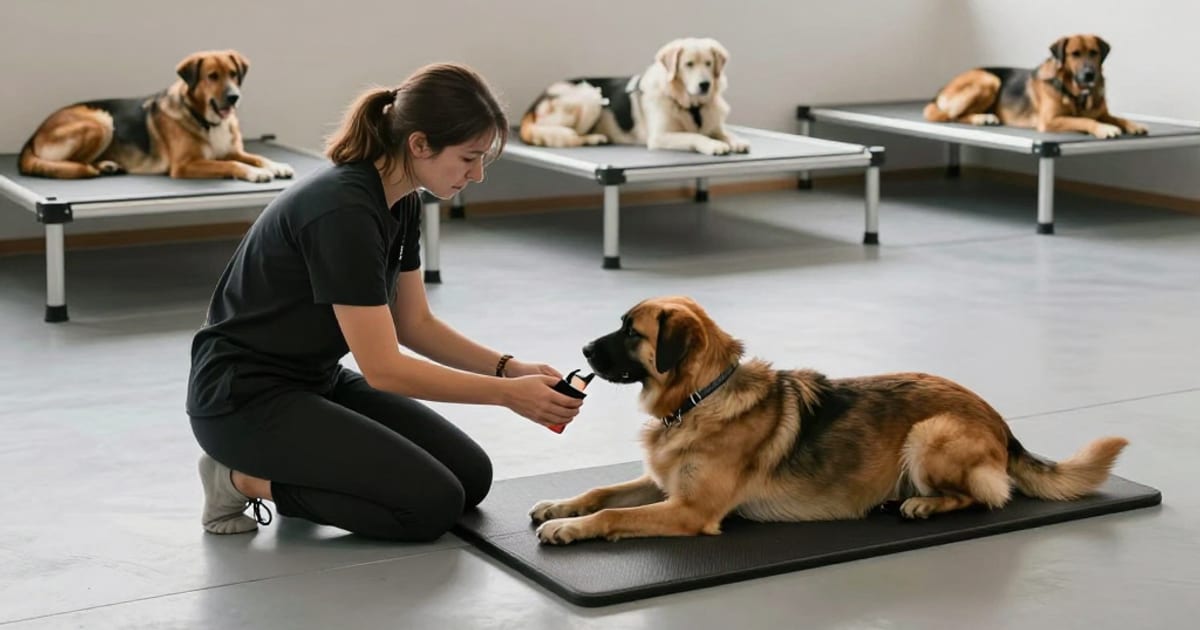
Ten minutes, twice a day. That was the homework you set after the second private session, and the owner nodded along. A week later she admits it happened twice. She and her partner both work long days, the dog is eleven months old and climbing the walls, and she asks the question you have heard three times this month: "Is there any way you could just train him while we're at work?"
What she is describing is a dog day training program. The owner drops the dog off in the morning, you run short sessions through the day, and the dog goes home in the evening, tired and a little better mannered, with a report on what you did. It sits between private lessons and board and train, and for many trainers it is the program clients have been asking for without knowing what to call it.
Before you say yes, decide how it will actually run. The version you improvise for one client is very hard to stretch to six.
Who day training for dogs suits, and who it doesn't
Day training suits owners with more money than time: two working adults, long commutes, families who want the skills built quickly and are happy to learn the maintenance. It suits adolescent dogs who need structure and an outlet, puppies laying foundations, and skills you can build without the owner present, such as loose-leash walking, place and calm greetings.
It suits less well when the problem lives in the relationship or in the home. Reactivity on the owner's own walks, separation distress and aggression toward family members usually need the owner involved from the start. Day training can still help there, but alongside private sessions where the owner learns to handle the dog, not instead of them.
How many dogs can one trainer take in a day?
This decision makes or breaks the program. Every dog needs several short sessions, rest between them, toilet breaks, lunch on a long day and notes for the report. Many trainers find three to five dogs a day is a comfortable range for one person, depending on the dogs, the space, and whether anyone helps with kennelling and cleaning. Start at the low end. Opening a fifth spot later is easy; taking one back from a client is not.
Write the cap down and treat it as a hard limit. The danger is the extra dog on a busy Tuesday, accepted because the owner was in a bind. Quality drops for every dog in the room, the report cards get thinner, and you finish the day with nothing left for your evening lessons. If more than one trainer runs day training, give each one their own capacity rather than one number for the building.
Pricing day training: per day or packages
A per-day rate is the simplest place to start. Build it from what the day costs you, not from what the daycare down the road charges, because you are selling training time, not supervision. Many trainers land somewhere above a private session and below a night of board and train, but rates vary widely by region, so work from your own numbers. How to price dog training services walks through that.
Packages suit most clients better than single days, because day training needs repetition to show results. A pack of ten or twenty days used over a month or two gives the dog consistency and gives you predictable bookings. Most owners settle into the same days every week, so set those up as recurring days ("every Tuesday and Thursday") drawn from the package, and keep the count honest (more on package tracking here). Add a late-pickup fee with a short grace period, and put it in writing before the first day.
Day training is sold by the day but delivered as a program. Price it, book it and report on it like one.
Intake once, use it every day
A day training dog brings the same questions every morning. What does he eat at lunch? Does he take medication? Is he fine with other dogs in the yard? What is he working on? Collect the answers once at intake and keep them on the dog, not on a sticky note: feeding instructions, medication, behavior notes, triggers, and the goals you agreed with the owner. Update the record when something changes, and it carries from one day to the next.
Get the paperwork done before the first day, not at the door. Vaccination records, a signed waiver and an emergency contact should all be in place before the dog's first drop-off.
The end-of-day report and the handover
The report card is what the owner is really buying, because it is the only part of the day they see. Keep it short and specific: what you worked on, how it went, how the dog ate and rested, one photo, and one thing for the owner to practise that evening. A report that is ready at pickup beats one that arrives at nine at night.
Pickup itself should take five minutes, not thirty. Hand over the dog, point to the report, and save the coaching for transfer sessions. A transfer session every few weeks, where the owner handles the dog while you coach, is what makes day training last at home. Build them into your packages so they actually happen.
Running a dog day training program without the paperwork
Day training creates a pile of small admin: who is in today, who did not turn up, who is being collected late, which day comes off which package. In HeelYeah, day training has its own daily roster with check-in, check-out, no-show and completion, plus a bulk cancel for a whole day when you are ill. You set a daily capacity per trainer, with a business-wide default, so a full day stops taking bookings. Recurring day bookings can be paused, edited or cancelled as a series.
Each dog has a perpetual intake with feeding instructions, medication notes and behavior tags that carries from day to day. As you log the day, the report card in the owner's portal updates live, and an AI end-of-day summary is drafted from your logs for you to review before the owner sees it. Client self-booking is off by default, and when you turn it on, requests are checked against your capacity. Completing a day either bills it, with a late-pickup fee if one applies, or draws it down from a package. Day training is included on the Fetch plan and up.
From a trainer using HeelYeah
“HeelYeah has made it so much easier to keep every part of my dog training business organized in one place. From client and pet information to paperwork, scheduling, and payments, everything is easy to find and manage.”
Start small: two or three dogs, two or three days a week, a written cap and a simple report card. Once the routine holds, open more days. The clients asking you to "just train him while we're at work" are already in your inbox.