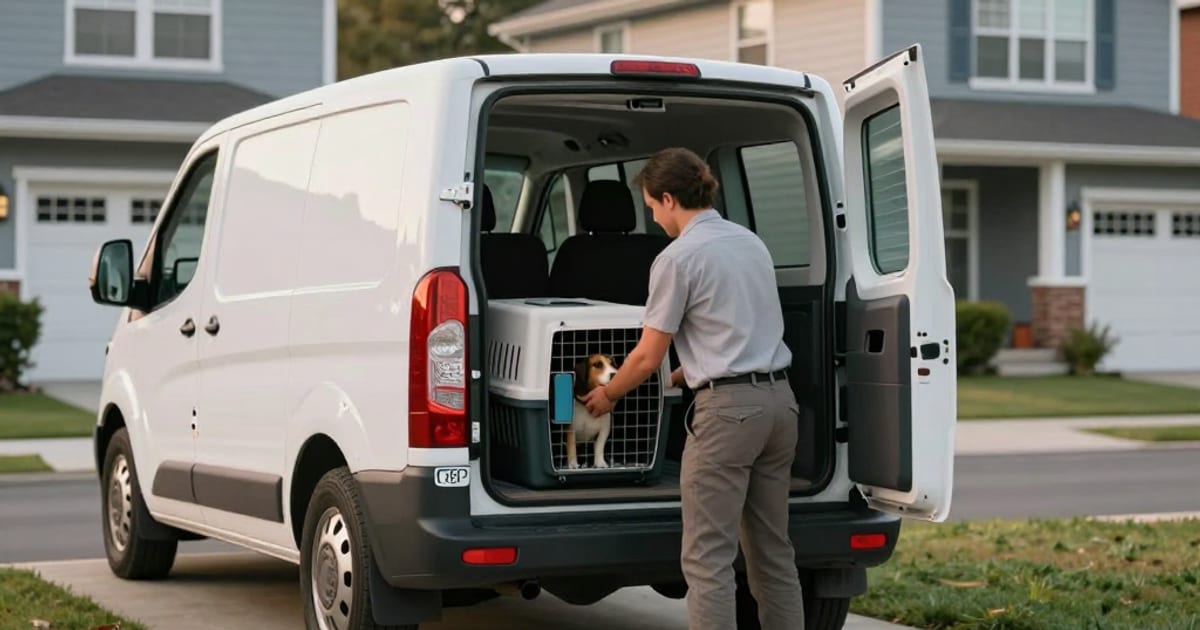
"If you could pick her up, we'd do four days a week instead of one."
Maple's owner works at the hospital across town, starts before you open, and finishes after you close. She loves your day care. She just cannot get there. It is the third time this month someone has said a version of it, and the second time you have done the arithmetic in your head on the drive home: four days instead of one is three more paid days, every week, from one client, if you offered a dog daycare pickup and drop-off service.
Then the other questions arrive. Who drives? In what? What if nobody is home at drop-off? What do you charge, and does a dog twenty minutes away cost the same as one on your street? Transport can be one of the best things you add, or a van that loses money every weekday. The difference is almost all in how you set it up.
Is there real demand for a dog transport service?
Before you buy a van, count. The clients who ask for transport tend to fall into a few groups: commuters whose hours do not match yours, city clients without a car, older owners who find the drive hard, and households with two or three dogs who would come more often if getting there were easier.
Ask your current clients directly, with a short message: would you use pickup or drop-off, how many days a week, and roughly where are you? If a dozen households say yes and most of them sit in two or three neighbourhoods, you have the start of a route. If the yeses are spread across the whole county, you have an expensive taxi service.
The strongest case for transport is rarely the ride fee. It is frequency and retention. A client who used to come once a week and now comes three times because you collect the dog is worth far more over a year than the rides themselves.
How to price a dog daycare pickup and drop-off service
Most facilities price transport in one of three ways:
- Per leg. A fixed price for each pickup and each drop-off. Simple, and fair to the client who only needs one direction. Prices are often somewhere around $10 to $25 a leg, but they vary a lot by region and distance.
- Zones. A per-leg price that rises with distance, so the far stop pays for its extra time.
- Packages. A monthly price covering the legs a client uses every week, often sold alongside a day care membership.
Whichever you choose, start from cost, not from what feels polite. Add up the driver's paid time for the whole route, fuel, vehicle wear, and the extra insurance a commercial vehicle needs. Divide by the number of dogs on a typical run. If a two hour morning route carries eight dogs, each leg needs to cover a quarter hour of driver time plus its share of the van. The same thinking as pricing your training services applies: know your number before you set a price.
Route planning and van capacity
A van's capacity is the number of crates it carries, not the number of seats. A Great Dane and a Jack Russell do not fit the same crate, so plan by crate size. Keep dogs crated and apart while the van is moving, and never load more dogs than you have safe crates for.
Set a route window, not an exact time. "Between 7:00 and 7:45" is a promise you can keep. "7:20" is not, once one owner is still looking for the leash. Put a ceiling on how long any dog spends in the van, and if the route grows past it, split it into two routes rather than stretching one.
Expect the route to change daily. A dog is sick, a family is on holiday, a new client starts on Wednesday. The plan you made on Monday is only right on Monday, so whoever builds the route needs to see the day's real list, not last week's.
Safety: who is in the van, and the handoff at the door
Every dog on the van should meet the same rules as a dog in your building: current vaccines, a passed temperament evaluation, and whatever eligibility rules your day care uses. A van is a smaller, hotter, louder room than any play yard, so if anything the bar is higher.
The handoff is where most of the risk sits. Decide who the driver may hand a dog to: the owner, people on the client's authorized pickup list, or nobody else. Decide what happens when no one is home. Some facilities take the dog back to the building and charge for the wait; others leave the dog inside if the client has given a key or a door code in writing. Put it in your client agreement, so the driver is following a rule, not making a judgment on a doorstep.
Then tell the owner. A short notice when the dog is on its way, and another when it has been left at home or with the driver, takes away most of the anxious texts.
The handoff at the door is a check-out. Treat it like one.
Keeping drivers in the loop
Drivers need three things on their phone: today's stops in order, the notes for each stop (the gate code, the dog who slips out the side door), and a way to say how each stop went. A printed list in the cup holder fails the moment a stop changes after the van leaves.
They also need to hear about changes from you, not from an owner standing on the pavement. And when one driver is running late, handing a stop to the other van should be a tap, with the office aware of it, not a phone call while driving.
The pitfalls to plan for
- Insurance. Personal car insurance often does not cover business use. Check your policy before the first ride.
- Far-flung stops. One distant client can add half an hour to every route. Price it, or say no.
- Scope creep. "Could you drop him at the vet on the way?" Decide in advance whether you do that, and what it costs.
- Starting too big. Begin with one route on the days you are busiest, and grow from what the numbers show.
From a trainer using HeelYeah
“HeelYeah has made it so much easier to keep every part of my dog training business organized in one place. From client and pet information to paperwork, scheduling, and payments, everything is easy to find and manage.”
HeelYeah runs transport from the same place as the rest of your day care and kennel. You set up a van roster, give each dog a standing pickup and drop-off plan, and work the day from a Transport tab with a route per van. Routes re-optimize when stops change, you can move a dog between vans, and a whole van checks in at once when it pulls up. Owners get a "Ride to day care" or "Left with the driver" notice.
You charge each ride at a per-leg price, or sell a Pickup/Drop Off package, and bundle it with a Day Care plan for one combined monthly charge. Riders land automatically in Daycare Pickup and Drop-off groups, so you can message everyone on a route. Drivers get a My route view on their phone, can hand a stop to another driver and record how it went, and get a "Your route changed" heads-up when you move their stops. Transport serves boarding stays as well as day care visits.
Start with Maple's street. If the numbers work for one route, they will tell you when to add the second.