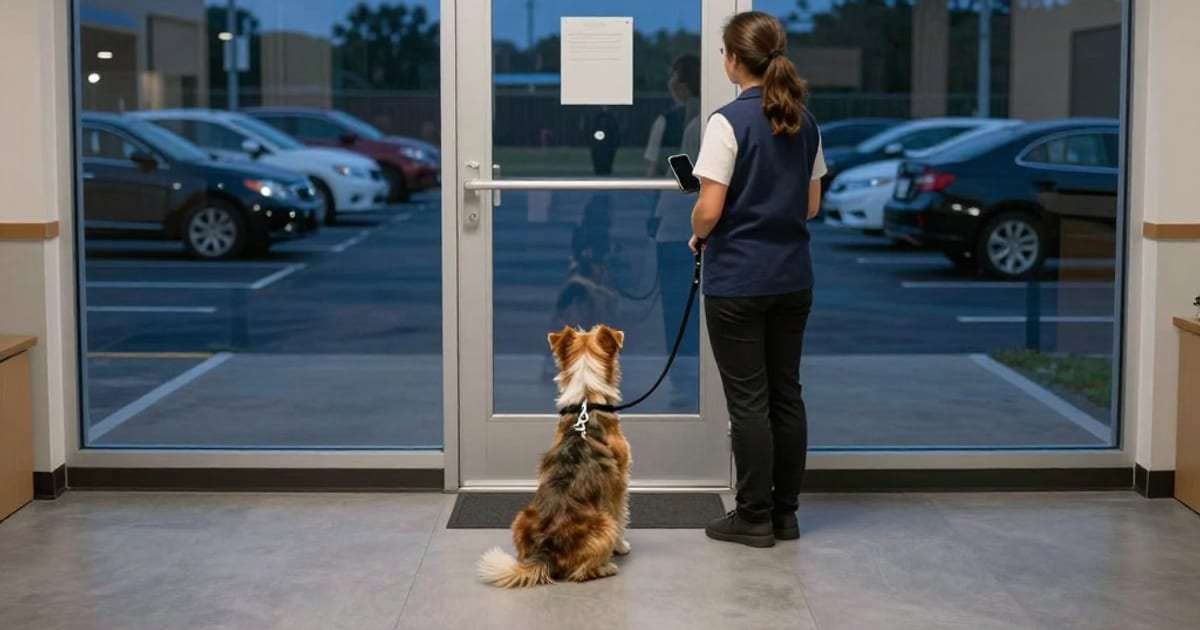
"Traffic is insane, SO sorry!! 15 min??" The text lands eight minutes before close. The staff member reading it has her own kid to collect from after-school care, and she is now the only person left in the building with one anxious cockapoo.
The owner arrives twenty-five minutes after close, apologizes warmly, and leaves. Nobody mentions a fee, because the dog daycare late pickup fee is written in the policy but nobody has ever charged it. It is the third time this month for this owner. The staff noticed. So did the other clients who saw the lights still on.
A late pickup policy only works if owners believe it, and they only believe it if you apply it. Here is how to write one that is fair enough to enforce every time.
Why late pickups cost more than they look
Twenty minutes does not sound like much. But a late pickup keeps at least one paid staff member in the building, often two, because many facilities do not leave a single person alone with dogs after hours. It pushes back closing tasks, it means someone else's evening plans change, and the last dog in the building is usually the most stressed one.
The bigger cost is the precedent. Once owners learn that close time is really close time plus twenty, your closing time quietly moves. A late pickup fee is not a revenue line. It is a way of keeping your published hours true.
How long should a late pickup grace period be?
A grace period is for traffic, a train delay, a meeting that ran over. It is not for habit. Many facilities use somewhere between five and fifteen minutes. Shorter feels petty; longer becomes the real closing time.
Measure it by the facility clock, not the owner's phone, and record the actual pickup time at check-out so there is no debate. If an owner calls ahead, be gracious, but still apply the policy. Calling ahead is polite. It does not make the staff's evening shorter.
Per-minute or flat late pickup fee?
There are three common structures, and each sends a different message. The numbers below are examples only. Rates vary a lot by region, so set yours to roughly cover the staff cost of staying late and to be noticeable enough that people plan around it.
- Per minute after the grace period. For example, $1 to $2 a minute. It feels precise and fair, and it scales with the inconvenience. It also invites arguments about whether it was 7:11 or 7:13.
- Flat blocks. For example, $15 to $25 for each fifteen minutes or part of it. Easy to explain, easy to check, and a strong nudge not to drift into the next block.
- A single flat fee. For example, $20 to $30 once the grace period has passed. The simplest to run, and the easiest for owners to remember.
Whatever you pick, put the fee on the same invoice as the day itself, so it is a line item and not an awkward conversation. Decide in advance when you will waive it (a genuine emergency, a first time with a long-standing client) and keep a record when you do. A fee you waive for some people and not others is worse than no fee at all.
A late pickup policy is not about the money. It is about keeping your closing time true.
What happens if nobody comes?
Your policy needs a plan for the dog whose owner simply does not arrive. A sensible sequence: at the end of the grace period, call the owner. Fifteen minutes later, call the emergency contact and anyone on the authorized pickup list. At a fixed cutoff, perhaps an hour or ninety minutes after close, the dog stays overnight as a boarding guest at your normal overnight rate, plus the late fee.
Converting to an overnight only works if you have overnight staffing and a run to put the dog in, and if the owner agreed to it when they signed up. If you do not board, name the alternative in writing instead, whether that is a staff member's home or a partner kennel, and get the owner's consent to it up front. The consent forms and waivers you already use are the right place for that clause.
Authorized pickups: who can collect a dog from daycare?
Late pickups and pickups by other people go together. When the owner is stuck, they send someone else. Ask every owner for a list of people allowed to collect their dog, with a name, phone number and relationship for each, and ask them to keep it current.
When someone other than the owner arrives, check their name against the list and ask for photo ID. If they are not on it, do not release the dog until you have reached the owner and they have confirmed in writing, by text or email, who is collecting. Many facilities also set a minimum age for whoever collects the dog. Whoever it is, record who actually took the dog home. If there is ever a question about what happened, that record is your answer.
Sample dog daycare late pickup policy
Adapt the numbers and times to your facility:
"Day care closes at 6:30 PM. Dogs collected after 6:40 PM incur a late pickup fee of $25, added to that day's invoice. If we have not heard from you by 6:45 PM, we will call you, then your emergency contact and authorized pickups. Dogs not collected by 7:30 PM will stay overnight as boarding guests at our standard overnight rate, plus the late pickup fee. We will only release your dog to you or to someone on your authorized pickup list, with photo ID. If someone else needs to collect, please tell us in writing before they arrive."
Short, specific, and no adjectives. Put it on your website, in your sign-up paperwork and on the wall by the front desk, and point to it in your client communication the first time someone is late, before you have to charge it.
Enforcing your late pickup policy in HeelYeah
In HeelYeah, you set a late-pickup grace period in minutes after close and a late-pickup fee that applies once it runs out. The fee lands on the same visit invoice as the day, and staff with permission can waive it at check-out. Late pickups closing in or already overdue appear on the Needs-attention rail, alongside your boarding alerts, so the front desk sees them before the owner walks in.
If a dog does stay the night, your boarding side is already there: the same front desk can book the stay and assign a run. Owners keep their own authorized-pickup list in the client portal, staff can edit it too, and at check-out you record who collected the dog: the owner, someone on the list, or a one-off name you enter. The pickup confirmation email tells the household who collected. Day training invoices carry a late-pickup fee as well, when one applies.
From a trainer using HeelYeah
“HeelYeah has made it so much easier to keep every part of my dog training business organized in one place. From client and pet information to paperwork, scheduling, and payments, everything is easy to find and manage.”
Write the policy once, apply it every time, and let the invoice do the talking. Most owners are late once. With a clear policy, very few are late three times.