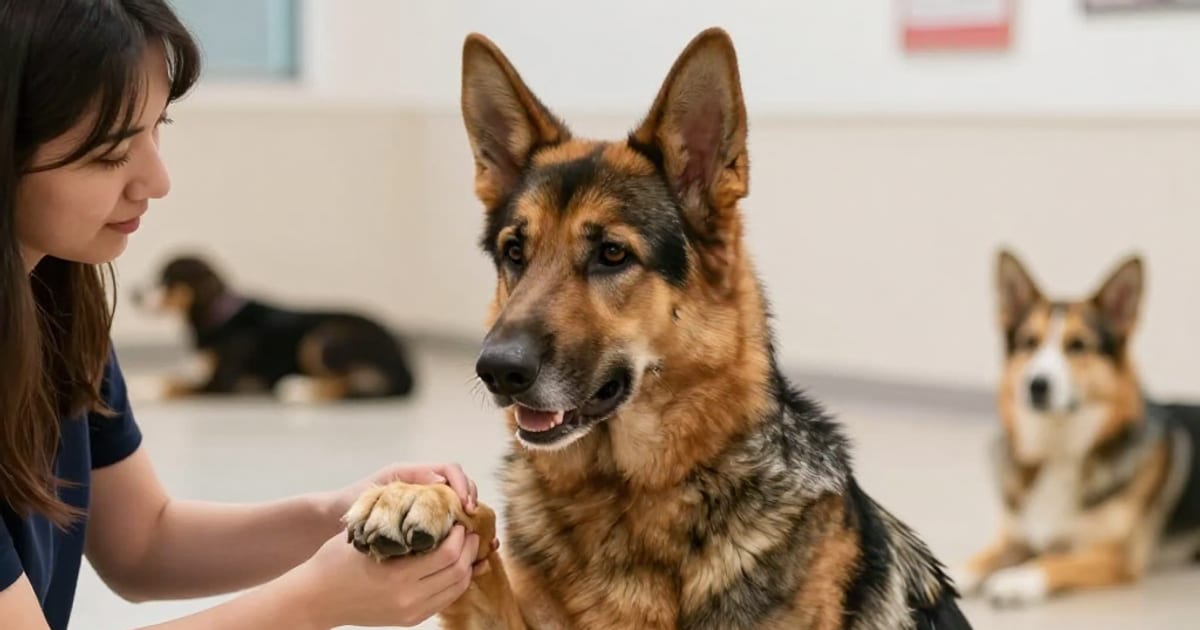
The photo on your attendant's phone is of a paw. Left front, a small flap of pad lifted at the edge, a little blood on the rubber floor of the big yard. The dog is Juniper, a two year old shepherd mix who has come three days a week since spring. She is not limping much. She is mostly annoyed that someone is holding her foot.
"She was running the fence line with the doodles and came up sore," your attendant says, already filling in the dog daycare incident report. "I cleaned it and she's resting. Do we tell her mum now or at pickup?"
That question, and what gets written down in the next ten minutes, decides how this ends. A torn pad is a minor injury. A torn pad the owner discovers on the kitchen floor at seven that evening, with no call and no note, is how a good client starts looking at other day cares.
What counts as a dog daycare incident report
An incident is anything that happened to a dog in your care that its owner would want to know about. That covers the obvious ones, a scuffle, a nip, a bite that breaks skin, a torn pad or a split nail. It also covers the quieter ones: a dog that ate something it should not have, slipped a collar, went quiet and stopped playing, or was limping at the end of the day.
Set the bar low. A written dog daycare incident report for a minor scrape takes five minutes. Not having one when the owner asks about a mark you never mentioned costs much more. If a staff member is unsure whether something counts, the answer is to write it up and let a manager decide how serious it is.
What every incident report needs to capture
Write the report the same day, ideally within the hour, while the people involved still remember the details. A sample template you can copy:
- Dog and owner. Name, breed, and the client it belongs to.
- When and where. Date, time, and the yard, room or play group.
- Who was there. The staff member supervising, any witnesses, and the other dogs involved, recorded internally.
- What happened. What you saw, in order: before, during, after. Observations, not guesses.
- Injuries. Where, how big, and what they look like. Take a photo.
- Action taken. First aid, separation, rest, a vet visit, and who decided.
- Severity. A simple scale your team uses consistently, from "note only" to "vet needed".
- Owner contact. Who called, when, and what was said.
- Follow up. Any change to the dog's group, schedule or eligibility, and a date to review it.
"Juniper tore her pad running" is a conclusion. "Juniper was running the fence line with two other dogs at about 2:15, stopped and held up her left front paw, and had a small flap of pad lifted at the outer edge" is a record. The second one still holds up three weeks later.
Telling the owner: the phone call before the email
For anything with a mark, a wound, or a vet visit, call before pickup. Not a text, not the written report on its own. A short, calm call: what happened, how the dog is now, what you did, and what you suggest they watch for. Then send the written report so they have the details in front of them.
The order matters. A phone call says you are taking it seriously and telling them yourself. An email alone, about an injury, reads like paperwork. And an owner who finds a wound at pickup before anyone mentions it will wonder what else they have not been told.
When two dogs are involved, each owner hears about their own dog. Do not name the other family or share their contact details. "Juniper was playing with two other dogs in her group" is enough.
Owners forgive a scuffle. They rarely forgive finding out at pickup.
The tone that keeps an owner's trust
Plain, specific and unhurried. Do not minimise ("just a tiny nick, nothing to worry about") and do not dramatise. Say what you saw, what you did, and what happens next. If you are changing something, say so: a smaller group for a week, a rest break in the afternoon, a check of the fence line.
Some wording that works: "I wanted to call before pickup. Around quarter past two, Juniper was running with two dogs in her group and came up sore on her left front paw. She has a small tear on the edge of her pad. We cleaned it, kept her resting for the afternoon, and she is comfortable now. It's worth keeping an eye on it for a couple of days. I'll send you the written report and a photo now."
The same habits that make good session notes apply here. Write for the owner who will reread it later, not for yourself in the moment.
Spotting patterns across incidents
One incident is an event. Several are information. Once reports live in one place, look at them monthly. Is it the same dog? The same pairing? The same group size, or the last hour of the afternoon when everyone is tired? A run of scuffles in one yard after 3pm points to a fatigue and staffing question, not a problem dog.
When it is the same dog, an incident is not automatically a ban. It might mean a smaller group, shorter days, or a fresh temperament check. Tagging the behavior you are seeing makes the pattern visible over time, so the decision rests on a record rather than on whoever had the worst afternoon with that dog.
Why the paperwork matters for insurance and disputes
If an owner asks you to cover a vet bill, or your insurer asks what happened, a dated report written on the day, with photos and the name of the person supervising, is the thing that settles it. A recollection three weeks later does not. Ask your insurer what they need to see after an incident, and make sure your template captures it.
Your client agreement should also say how you handle injuries in group play, including vet care, so the report is applying a rule the owner already signed. If yours is vague, our guide to consent forms and waivers covers what to include. None of this is legal advice; check the details with your insurer or a local professional.
From a trainer using HeelYeah
“HeelYeah has made it so much easier to keep every part of my dog training business organized in one place. From client and pet information to paperwork, scheduling, and payments, everything is easy to find and manage.”
In HeelYeah, every dog has an incident log: what happened and how serious it was, with photos and video attached, and the serious ones raise a notification. If you run day training, a trainer can log an incident while updating the day's log, and a severe one can be emailed to the owner straight away, with what happened and the action already taken. Around that, categorized notes carry privacy flags, so internal notes stay internal and client-visible ones reach the owner, and behavior tags track the patterns across months.
Make the template this week and print it for the yard. The next torn pad will still happen. The difference is that Juniper's owner hears about it from you, at half past two, with a photo and a plan.