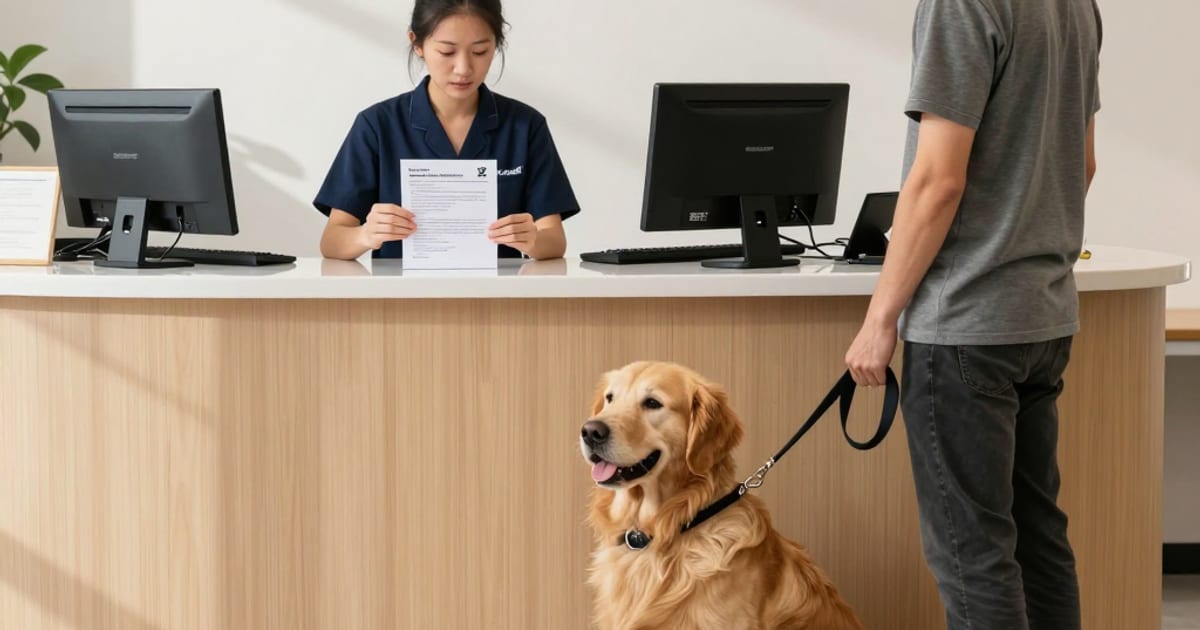
"Hi! Dropping Bear off tomorrow morning for the week. Quick thing, I think his kennel cough shot might be due? Vet can't see us until the 20th. That's fine, right?"
The text lands while you are locking up. Bear is a lovely dog. His family has boarded with you four times. Your dog boarding vaccination requirements say rabies, DHPP and Bordetella must all be current. His rabies certificate is on file, his DHPP is fine, and his Bordetella expired eleven days ago. He is booked into a run between two other dogs for seven nights, and the family flies out at noon.
Whatever you say next, you are setting policy. If you say yes, you have a rule that bends for families you like. If you say no at nine at night, you have an unhappy client and an empty run. The time to decide was months ago, in writing, and the time to catch it was when the booking came in.
Dog boarding vaccination requirements: what facilities usually ask for
There is no single national list, but most boarding kennels and day cares in North America and the UK land on a similar core. This is a summary of common practice, not medical advice. Set your own list with your vet and check what your local and state or provincial rules require.
- Rabies. Required by law for dogs in most places, so it is almost always on the list, with proof from a vet.
- DHPP or DAPP. The combination vaccine covering distemper, adenovirus (hepatitis), parainfluenza and parvovirus.
- Bordetella. The main kennel cough vaccine. Many facilities ask that it is given a set number of days before arrival, so it has time to work.
- Canine influenza. A common optional requirement, often added in regions that have had outbreaks.
- Leptospirosis. Optional at many facilities, more often required where the disease is common locally.
Daycare vaccine requirements usually match the boarding list, and some facilities are stricter for day care, because a day care dog shares space and water bowls with the same group every week. Whatever you choose, write it down and apply it to every dog the same way.
Titers, exemptions and the dog with a vet's letter
Sooner or later a client hands you titer results instead of a vaccine record. A titer is a blood test showing antibody levels, and some owners and vets prefer it to revaccinating an older dog. Some facilities accept titers for distemper and parvo. Rabies is different: in many places the law requires the vaccine itself, and a titer does not replace it. Ask your vet and your local authority before you decide.
The same goes for medical exemptions. A senior dog with a health condition may come with a letter saying a vaccine should be skipped. You can accept these, refuse them, or accept them for private suites but not group play. The point is to decide once, not at the counter.
How to write a dog boarding vaccine policy clients actually read
A good policy is short enough to fit in a confirmation email and specific enough that a new staff member can apply it without asking you. It should answer these questions:
- Which vaccines are required, and which are optional or recommended.
- What counts as proof. A record from a vet, not the owner's memory or a handwritten note.
- How far before arrival a vaccine must be given, if you require a waiting period.
- Whether each vaccine must be valid for the whole stay, not just on the day of arrival.
- Whether you accept titers or vet exemptions, and for which vaccines.
- When records are due. For example, "on file 48 hours before your booking".
- What happens if they are not. The booking is held, moved, or cancelled under your usual terms.
Sample wording you can adapt: "All guests need current rabies, DHPP and Bordetella, given by a licensed vet and valid through the last night of the stay. Please upload records at least 48 hours before arrival. We cannot check in a dog whose records are missing or expired, so if a vaccine is due, book the vet visit first and we will gladly hold your dates." Put it on the booking page, in the confirmation, and in your waivers and agreements so nobody is surprised.
Chasing vaccine records without losing your mind
The chase is where most of the time goes. Records arrive as phone photos, forwarded vet emails and PDFs with three dogs on one page. Somebody has to read each one, work out which dog it belongs to, and type the dates in. If that happens at the door with a dog on a leash, it happens badly.
Move the work earlier. Ask for records when the booking is made, the same way a board and train intake form collects the dog's history before day one. Give clients one place to send them. Then check every upcoming arrival against its checkout date, not its arrival date. A vaccine valid on Monday that expires on Thursday is a problem for a seven night stay.
Remind people early. A note a few weeks before a record expires gives the owner time to book a vet visit. A note the night before gives them a reason to be annoyed with you.
A vaccine that is valid the day a dog arrives and expires on day four is still a problem you agreed to.
What to do at the door when a record is expired
Even with good habits, a dog will turn up with an expired record. Have the answer ready before it happens:
- Check whether it is paperwork or the vaccine. Often the dog was vaccinated and the new record never reached you. A quick call to the vet clinic, if they are open, solves it.
- Say it the same way every time. "I'm sorry, our policy is that every dog's vaccines are current through checkout, and Bear's Bordetella lapsed on the 3rd. Let's sort out the vet record or move the dates."
- Offer a way forward. Hold the run for a day, move the booking, or suggest a nearby vet with walk-in hours.
- Do not make exceptions for good clients. Every other client in the building is trusting the same rule.
Day care is a slightly different call. Some facilities let a dog with a recently lapsed record in with a warning and a deadline. Others turn it away. Both are reasonable, as long as it is a setting you chose rather than a judgment made by whoever is on the desk.
Keeping vaccine records in the same place as the booking
None of this works if the records live in an inbox and the bookings live somewhere else. The check has to sit where the arrivals list is, so the person at the desk sees it before the dog walks in, and so the manager sees next week's problems this week. If you already run your building from one board, as described in kennel management without a whiteboard, vaccine status belongs on it.
From a trainer using HeelYeah
“HeelYeah has made it so much easier to keep every part of my dog training business organized in one place. From client and pet information to paperwork, scheduling, and payments, everything is easy to find and manage.”
In HeelYeah, you define your own vaccination policy: which vaccines you require and which need an expiry date. Each dog carries its vaccine records with administered and expiry dates. Owners upload their paperwork, and it lands in a review queue where you check it and file it against the right dog. Expiry warnings show on your dashboard before a dog falls out of compliance, and a compliance report covers your whole roster.
On the kennel side, the front desk shows vaccination status on every arrival row, and the Needs-attention rail lists any vaccine that expires before that dog's checkout. For day care, you choose whether a missing or expired record blocks the check-in or only warns you.
Write the policy this week. Bear's family will still be disappointed if his record has lapsed, but they will have heard about it three weeks ago, not at nine at night.