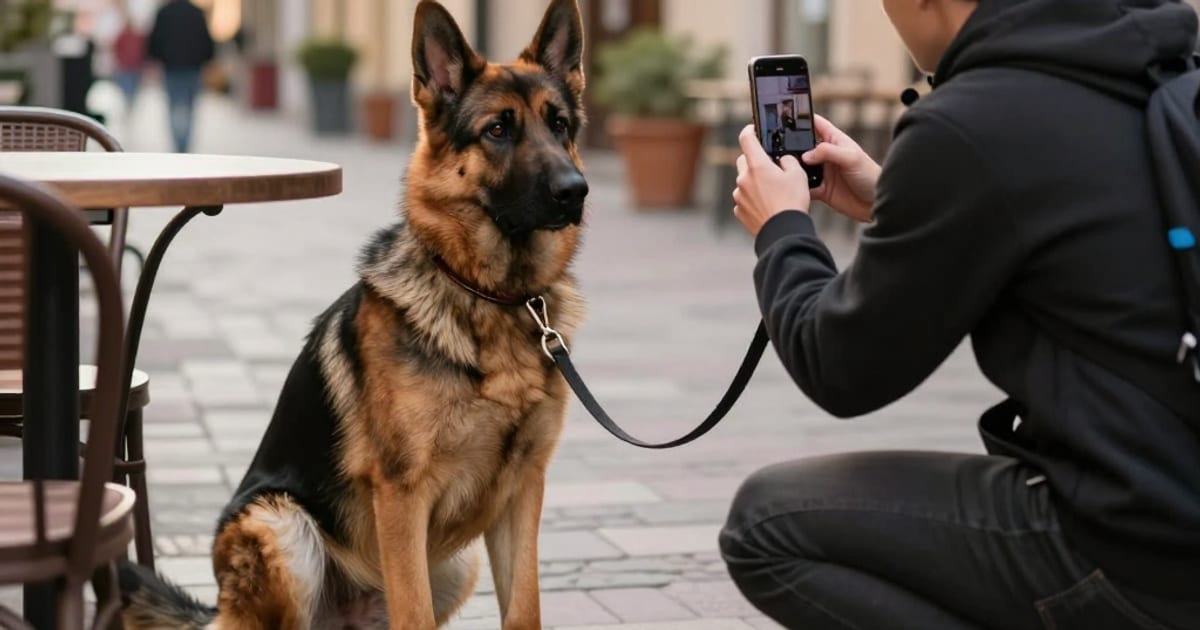
"Sorry to bother you again. Is he eating okay? Does he seem sad? I keep checking my phone."
The message arrives on day nine of a three-week program. Her dog, a twenty-month-old shepherd mix who used to drag her across the road at the sight of a bike, is doing well. He held a down outside a cafe this morning for six minutes. He has eaten every meal. He is asleep in his run right now with a chew. She knows none of this, because the last of your board and train updates was a photo on day five and a line that said "great day!"
She is not a difficult client. She handed her dog to someone she has met twice and has not seen him for nine days. Every gap in what you tell her gets filled with worry, and worry turns into messages, then into doubt about whether the program is working at all.
Why board and train updates matter as much as the training
The owner of a board and train dog is paying a large sum for work they cannot see. In a private lesson they watch every rep. In a residential program, your board and train updates are the only window they have. For the owner, until pickup day, the update is the service.
Good updates do three jobs. They settle the owner's nerves, which cuts the anxious messages you would otherwise answer one at a time. They show progress, which protects you when the dog behaves differently at home in the first week. And they teach the owner what you are doing and why, so the go-home lesson builds on two weeks of context instead of starting cold.
All of this depends on what you agreed before the dog arrived. If you set clear goals and exit criteria at intake (see what to include in a board and train intake form), your updates have something to report against. Without them, every update reads as "good boy today".
How often should you send board and train progress reports?
Daily, and short. A brief update every evening beats a long one twice a week, because the owner learns when to expect it and stops checking in between. Pick a rough time and keep to it. If updates arrive around six for ten days and nothing comes on day eleven, you will hear about it by eight.
Once a week, add a fuller progress report: where the dog started on each goal, where he is now, what is still shaky, and what next week focuses on. That weekly report is the one owners screenshot and send to their partner, and the one you will both refer back to at the handover.
Agree the rhythm at drop-off. "You will get a short update each evening and a fuller report every Friday" sets the expectation, and it makes the quiet hours between updates feel planned rather than worrying.
What to put in a daily update
A daily update should take the owner under a minute to read and you under five minutes to write. A fixed structure keeps it consistent across dogs and across trainers:
- What you worked on. One or two skills, named the way the owner will use them at home: "place", "loose leash on the loop", "calm greetings".
- One concrete number. "Held place for four minutes with people walking past." "Sat for 7 of 10 greetings." Numbers show progress in a way adjectives cannot.
- How he is doing as a dog. Eating, sleeping, mood. This is the line an anxious owner reads first.
- One photo or short clip. More on choosing between them below.
- What is still a work in progress. Honest, specific and brief.
- What tomorrow looks like. It gives the owner something to look forward to.
Photos or video?
Both, for different reasons. Photos reassure. A picture of the dog stretched out on a cot or rolling in the yard answers "is he happy?" faster than any sentence. Video proves. A thirty-second clip of the dog walking past another dog on a loose leash is evidence the training works, and it is what owners show their friends.
Keep clips short, and film the whole exchange: the cue, the distraction and the dog's response, not just the good moment at the end. Owners learn more from seeing your timing and leash handling than from a highlight reel. One good clip a day is plenty. Twelve shaky videos are a chore to watch, and they bury the one that mattered.
Reporting a bad day honestly
Every program has a day when the dog goes backwards. He lunges at a dog he ignored yesterday, or breaks a stay he has held all week. The temptation is to leave it out. Resist it. If the owner hears only good news for three weeks and the dog then reacts on the first walk home, every update you sent starts to look like marketing.
An owner who read about the wobble on day eight trusts the progress on day fourteen. One who never heard about it trusts nothing.
Write the regression the way you would explain it in person: what happened, why it is normal at this stage, and what you are doing about it. "He reacted to a dog at about fifteen feet today, which he has not done since day three. New location, busy afternoon, so we stepped back to an easier distance and he recovered quickly. We will rebuild that distance over the next two days." That one paragraph builds more confidence than a week of "great day!" messages.
The go-home handover starts on day one
The handover is where a board and train program succeeds or fails, and good updates make it easier. An owner who has watched the clips already knows the cues, the leash handling and the words you use, so the go-home lesson becomes practice rather than a lecture.
Plan for it in the updates themselves. In the final week, add a "what you will do at home" line to each one. Invite the owner to a video call or a visit to watch a session. On pickup day, have the owner run the skills while you coach, then hand over a written plan: the cues, the daily practice, what to avoid for the first two weeks, and when you will check in.
How good updates sell the follow-up sessions
Owners who followed the program closely are the ones who book follow-ups. They have watched how much the dog changed with consistent handling, and they want to keep it. The simplest way to make that happen is to sell the follow-ups with the stay, so there is no second buying decision after pickup. Two or three go-home sessions built into the program price is common, and they keep the dog on track in the weeks when new habits are most fragile. They also give you a natural moment for follow-up after the program ends.
In HeelYeah, every board and train program has day-by-day logs with notes, photos, videos, behavior signals and trainer flags, and the owner follows them in their own portal. Each night, HeelYeah drafts a program summary from that day's journal logs, covering progress trajectory, regression risks and watchouts. You can regenerate it on demand, and you review it before the owner sees it. If the owner wants to change something mid-program, they send a change request and you approve or reject it. Stay-plus-sessions packages sell the boarding days and the follow-up 1:1s as one package, and the follow-ups stay bookable after the dog goes home.
From a trainer using HeelYeah
“It’s not just making the admin easier for me. It’s making it easier for my clients to actually follow their program. They know what they’re working on. They can find the resources I’ve given them. They know how many sessions they have left.”
The owner on day nine does not need an essay. She needs to know her dog is eating, sleeping and learning, and she needs to hear it before she has to ask. Send it every evening, show her the work, tell her the truth about the hard days, and the handover will take care of itself.