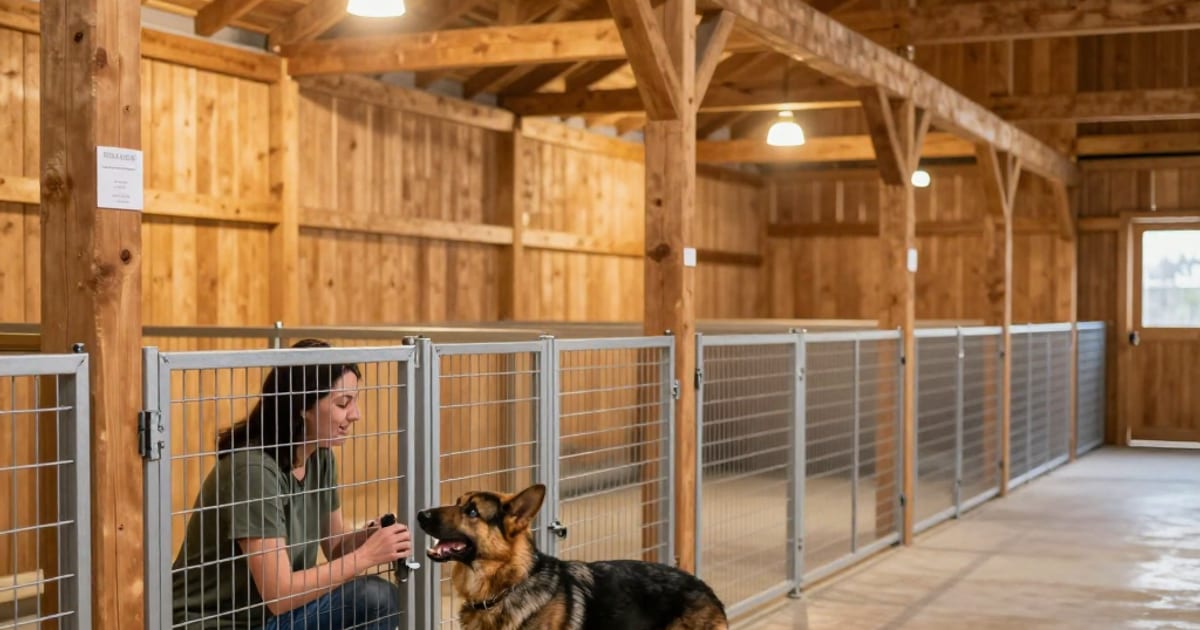
"Any chance you could keep Juno over Thanksgiving? Her usual kennel is full and she already knows you. We'll pay whatever." It is the third text like it this month. Juno did a two week board and train with you in the spring, and her owners trust you with her more than anyone.
You have four runs in the converted barn for board and train dogs, and most weeks two of them sit empty between programs. So the thought arrives, as it does for a lot of trainers: why not take boarders? You have the space, the clients are asking, and the dogs would be in good hands. Before you work out how to start a dog boarding business on the side of your training, it is worth doing the sums and the honest planning first.
Adding boarding or day care to a training business can work very well. It can also quietly eat your evenings, weekends and holidays. Here is how to tell which it will be for you.
Is there real demand for boarding where you are?
Texts from existing clients are a good sign, but they are not a market. Call two or three local kennels in early October and ask about availability for Thanksgiving and the week after Christmas. If they are full, demand at peak times is real. Ask about an ordinary Tuesday in February too, because that is the night that decides whether boarding pays for the rest of the year.
Then decide what you are actually adding. Overnight boarding means dogs in your care around the clock. Day care means a full building from eight until six and an empty one overnight, with group play, temperament screening and staff watching the playgroup all day. They draw on different skills and different staff, and many trainers find one fits far better than the other.
How to start a dog boarding business: licensing, zoning and insurance
This is the part to settle before you take a single overnight guest, and the rules vary a lot by country, state, county and town. Many places require a kennel or boarding license, some require inspections, and zoning rules often limit how many dogs you can keep at a home-based property or whether commercial boarding is allowed there at all. Noise and waste rules matter too if you have neighbors.
Call your local planning or zoning office and your licensing authority, and ask your insurer directly whether your current policy covers dogs staying overnight. Training liability cover often does not include animals in your care, custody and control. Nothing here is legal advice. Get the answers in writing from the people who enforce them, and update your contracts and waivers so they cover boarding stays.
Who is there at two in the morning and on Christmas Day?
Boarding is busiest exactly when everyone else is off: long weekends, school holidays, Thanksgiving, Christmas. If you are the only person who can care for the dogs, you have just signed up to work every holiday and to be within reach of the building every night a dog is in it.
Plan for at least two people who can run the full care routine on their own, so one illness does not mean cancelling stays. Decide whether someone sleeps on site or whether you check in late evening and early morning, and check what your local rules expect. Think about how this fits around your training. You cannot teach a 6pm class and do the evening feed and turnout for eight boarders at the same time.
Boarding is sold by the night, but it is paid for in the hours nobody books: six in the morning, ten at night, and every public holiday.
Capacity math: how many runs, how many nights
Work it out on paper before you buy a single kennel panel. Six runs available every night of the year is 2,190 run nights. You will not fill them all. Holidays may sell out, while quiet weeks in late winter might be a third full. As an example, if you average 50% across the year at $55 a night, that is about 1,095 nights and $60,000 before costs.
Now take off what it costs: staff hours for every feed, turnout and clean, laundry, utilities, cleaning products, insurance, licensing and wear on the building. Hold back runs for your own board and train dogs, which usually earn more per night than a boarder. And allow for turnover: a run that has just emptied needs cleaning before it can be sold again.
How much should you charge for dog boarding?
Price per night, by kennel size, rather than one flat rate. A large suite costs you more space and more cleaning than a standard run. Many facilities in the US charge somewhere between $40 and $80 a night for a standard run, with suites above that, but prices vary a lot by region, so check what three local kennels charge before you set yours.
- Add-ons for extra walks, one-to-one play, a training session during the stay, or bathing at checkout.
- A holiday rate and a minimum stay for peak dates.
- A deposit at booking for holiday stays, with a written cancellation window.
- Day play for boarders either included in the nightly rate or charged per day.
The daily work nobody puts in the business plan
Every boarder means meals on a schedule, sometimes medication with a precise dose, turnouts, cleaning, laundry, and a check that its vaccinations are current before it comes through the door. One dog will refuse to eat on night one, and someone will need to know whether that is normal for her. Owners will want a photo. Our article on running a kennel without a whiteboard covers how facilities keep track of all of it across shift changes.
How boarding and training feed each other
Here is the strongest argument for adding boarding. A boarder who pulls you down the aisle to its run is a training client in waiting, and an owner who sees your daily photos trusts you with the next problem. In the other direction, board and train graduates already know your building, and their owners would rather board with the person who trained the dog.
In HeelYeah, Kennels is on the Heel plan. You draw your building in the interactive kennel builder, with runs and zones, and a live occupancy board shows what is full, arriving, leaving or in turnover. The front desk lists arrivals and departures with vaccination status on each row. Clients request boarding stays from their portal, you approve or decline each one, and approval raises the invoice for the full amount or a deposit with the balance due at check-in. The care floor lists the day's feeds, medications and turnouts, there is a day care module if you add day guests, and board and train and day training dogs share the same board and floor plan as your boarders. See the kennel management features for the full picture.
From a trainer using HeelYeah
“HeelYeah! is the first one I’ve used that actually fits the way I work from beginning to end. I can manage my leads, onboard a new client, handle payments and scheduling, and then actually deliver and manage their training in the same place.”
Answer Juno's owners when you know the numbers, the rules and who is covering Thanksgiving night. If all three check out, boarding may be the most natural thing your training business ever adds.